

05 July 2017
Animals and Natural Forces Make a Movie More Authentic
Animals and Natural Forces Make a Movie More Authentic

Oscar-winning director Jan Svěrák (Kolya) is finishing up his latest feature, inspired by an autobiographical book by his father, screenwriter Zdeněk Svěrák. Titled Barefoot, it completes the loose tetralogy launched in 1991 with Elementary School.
Article by Hedvika Petrželková for Czech Film Magazine / Summer 2017
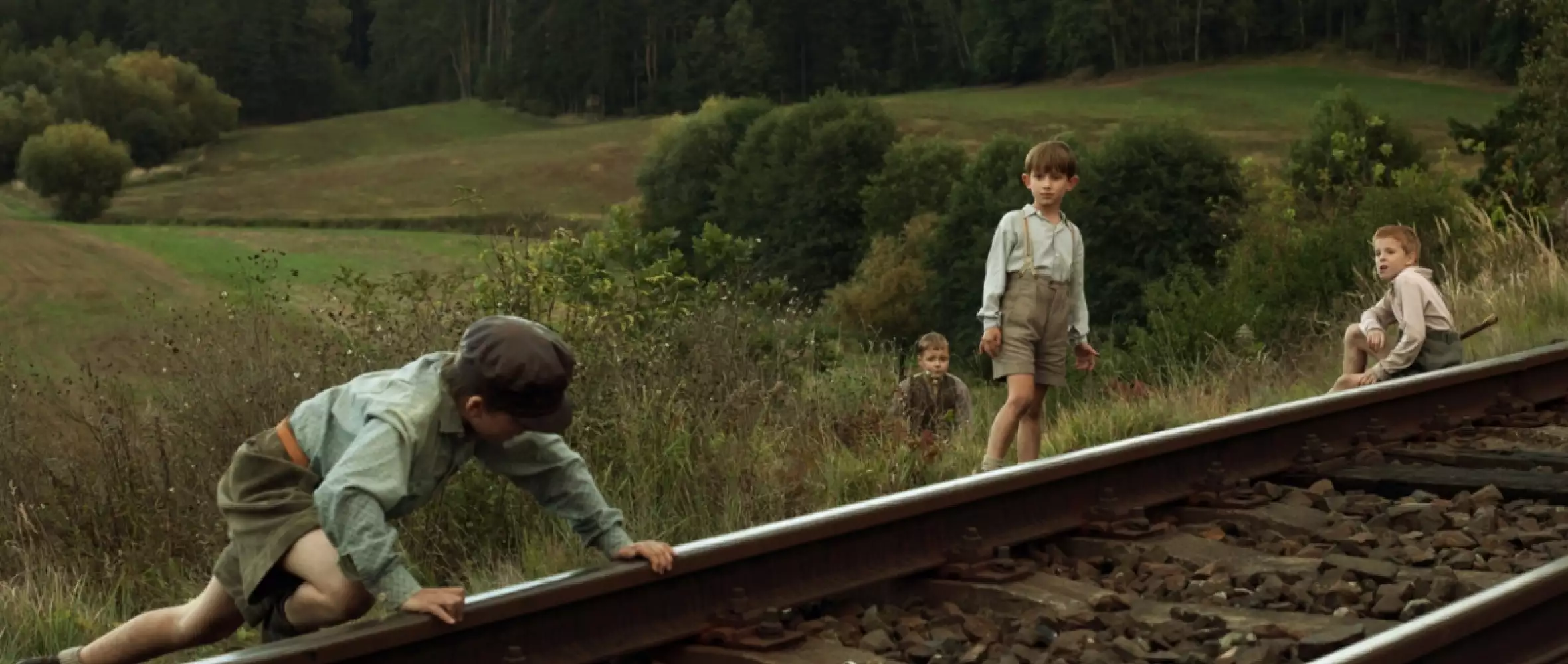
The film, set during world war II in the Czech countryside, where little Eda and his parents retreat after his father gets into conflict with the Nazi German occupiers, explores this challenging period in Czech history through the eyes of its child protagonist, who sees the war mainly as an opportunity for adventure.
“My dad and I describe our films as intimate stories told from the perspective of a male protagonist, set against the backdrop of historical events,” Jan Svěrák explains. Barefoot is based in part on the memoirs of his father, Zdeněk, who co-wrote the screenplays for the previous three films in the tetralogy: Elementary School (1991), Kolya (1997), and Empties (2006).
Barefoot takes place in the period just preceding Elementary School, which was set just after World War II and also centered on Eda. Kolya, which earned Svěrák the Oscar for Best Foreign Language Film, was set in the 1980s, before the Velvet Revolution, and the story of Empties plays out after the fall of communism. But, according to the director, there are no plans for a fifth film, set in the dark period of the ’50s and chronicling the hero’s youth.

“My dad is 80 and doesn’t want to write scripts anymore,” Jan Svěrák says. “When I asked him, he said nothing was interesting going on in the ’50s, no story to tell. So the only place you’ll find socialism in our movies is in Kolya.”
Historical Accuracy
History isn’t the primary theme of Svěrák’s films, but it is an essential backdrop to his stories, and he puts great emphasis on historical accuracy. “I’m a geek,” he says. “I like having all the equipment the way it actually was at the time, the uniforms and weapons, with all the ranks and all that—real enough so you could teach history from it. I don’t like it when the filmmakers assume enough time has passed that they can do whatever they want. You’re still transmitting information to future generations since the audience takes what they’re seeing to be the truth, and they often don’t have a way to look up the information, so I try to make my films historically accurate.”
“I enjoy working with both animals and children. It’s more demanding.”
Svěrák himself was born in 1965 and experienced occupation firsthand. They were Russian troops, not German, but he says there were some similarities in the experience. “I used to spend summer vacations with my grandmother in Kopidlno, where the movie takes place, and the tanks would drive by, right beneath our windows, when they were during maneuvers, relocating troops. It would last about an hour, and the whole house would be shaking. So I have some idea how it feels. We tried to make the atmosphere as authentic as possible, but there were all these things we realized along the way, while we were shooting, that were just impossible. For instance, doing a night scene on the street, or at the cemetery on All Souls Day, when normally there would be hundreds of candles lighting up the place, but because of the bombing there were mandatory blackouts, so the cemetery and all the windows in the streets would have been totally dark at night. It wasn’t easy.”
Besides creating an opportunity for family drama, the historical background also offers a setting for the more lighthearted events that come with being a city boy who moves to the country. These include encounters with animals: the horses Eda admires and the geese he teaches himself to graze. “I enjoy working with both animals and children,” the director says. “it’s more demanding. You have to let go of the idea that you’ll get everything on the first shot, but once you do, it makes for tremendous authenticity. And that’s exactly what you’re aiming for as a director — to create the most believable world you can. The audience has to feel like they can get inside the movie and experience everything along with the characters. Anything that breaks the illusion, anything that makes you say, ‘Hey, it’s just a movie,’ pulls you out of the story. But children and animals, with the right use of natural forces, go a long way toward making a movie more authentic.”
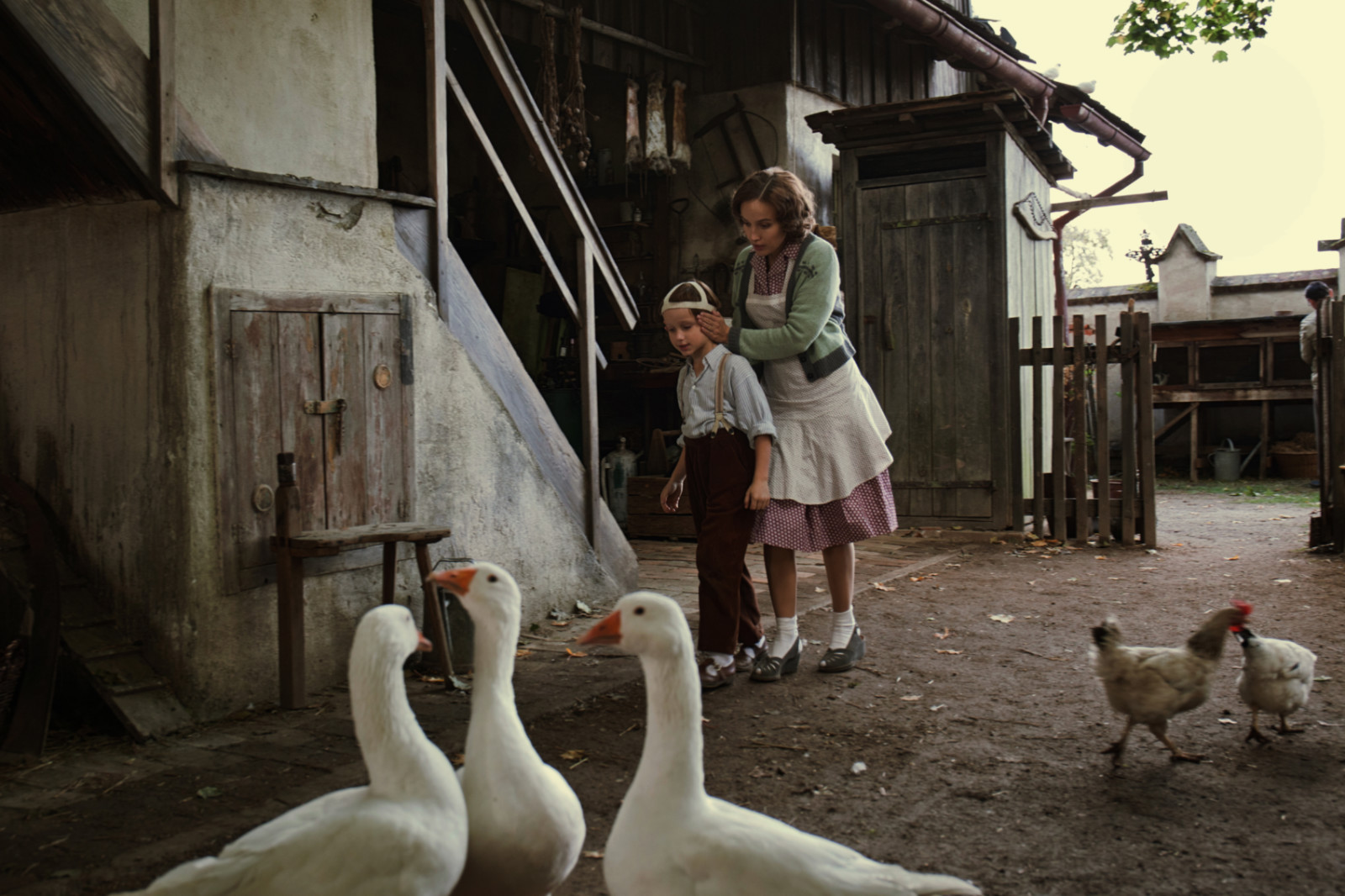
In the starring role of Eda, Svěrák cast first-time child actor Alois Gréc. “We found him by accident,” Svěrák says. “My producer’s sister used to babysit Alois and his two older siblings when they were little. She sent me pictures of him, then I gave him a screen test, and it turned out he has this incredible quality that his face is constantly alive. Even when he isn’t thinking of anything, it looks like his head is swarming with complicated thoughts. There’s this amazing Meyerhold effect going on. When you cut from a shot of his face to a funeral, the audience thinks, he’s sad. If you juxtapose his face with food, it looks like he’s hungry. Besides that, he’s also extremely intelligent, so after just two days of shooting he realized how boring it was and said, ‘I want to go back to the hotel. Being an actor’s no fun!’ Svěrák laughs. “I always enjoyed talking to him. We had long conversations about what it means to work, what are the responsibilities of an adult versus a child. I’ve had kids myself, so I know that when you approach them as equals, using words that they would comprehend, children are capable of understanding everything.”
Discovered Family History
The film has a slew of interesting characters inspired by more or less real Svěrák family ancestors. One is an uncle nicknamed “Wolf,” a family outcast who allegedly committed a mysterious crime, but in fact, turns out to be a victim of injustice. Then there is Eda’s grandfather, a strict man who acts as if he were a moral arbiter but in fact, has a highly controversial past.
“When my dad first started the screenplay, years ago, the only thing he knew about Wolf was you weren’t allowed to talk about him, so he barely appears in the original script. But I found the character interesting and decided we should try to find out more about him. My dad and i wrote to a relative in Canada we thought might know something, but didn’t get an answer, so we went ahead and started work on another movie. It took a while, but finally, we heard from her, and the news was a shock. We found out my grandfather had actually been a gambler, and we also got the true story of Wolf’s alleged crime, so we actually learned a lot about our family history writing this film. It didn’t sink in until later what I’m carrying in my genes: a great-grandfather who was a gambler and terrorized the family, and his son couldn’t stand up to him, so instead he took it out on his son — my father — who as a result of this awful experience grew up to be a great humanist, and because of the violence he experienced, he never laid a hand on any of us, he didn’t touch his kids. It all fits together,” Svěrák says, “sort of a family psychoanalysis.”
The film has a slew of interesting characters inspired by more or less
real Svěrák family ancestors.
Thanks to the international success of Svěrák’s previous films, Barefoot has a good chance of finding a foreign audience, but still, the director doesn’t want to get his hopes up. “It’s always a gamble what kind of reception a movie’s going to get abroad. There’s no way to predict. With Kolya, for instance, we had no idea it would appeal to anyone in other countries, since the movie’s about issues between Czechs and Russians, so ever since then, I’ve never had any expectations.”