


29 April 2026
Dagmar Sedláčková: The female gaze and the limits of agency
Dagmar Sedláčková: The female gaze and the limits of agency

Selected as the Czech representative for European Film Promotion’s Producers on the Move at this year’s Cannes Film Festival, Dagmar Sedláčková belongs to a generation of producers who are shaping contemporary Czech cinema with their clearly defined curatorial perspective. Working across fiction, documentary, and series, her projects repeatedly explore questions of female subjectivity, structural pressure, and lives unfolding on the margins of social visibility.
by Martin Kudláč for CZECH FILM / Summer 2026
Each year, European Film Promotion’s Producers on the Move program identifies emerging producers whose work signals both international potential and long-term industry relevance. Dagmar Sedláčková, a graduate of Film Studies at Charles University and Production at Prague’s FAMU, joined MasterFilm in 2014, working alongside Tomáš Michálek and Jakub Mahler. While the company operates as a shared production base, each of the producers has a clearly unique profile. Sedláčková’s slate is consistently oriented toward emerging filmmakers, often making their debuts or second features, and toward projects centered on women or perspectives shaped by exclusion, be it social, institutional, or ideological.
Across Sedláčková’s work, there is a recurring focus on individuals navigating circumstances that define or constrain their agency. These may take the form of disability, institutionalization, war trauma, or ideological structures. Yet her approach is not reducible to subject matter alone. The producer’s selection of projects is rooted in personal affinity and creative alignment, privileging those she feels she understands from within, her choices grounded in shared direction rather than simply commercial logic or market appeal.
Sedláčková’s most visible success to date is Caravan, the debut feature by Zuzana Kirchnerová, which premiered in Un Certain Regard at the 2025 Cannes Film Festival and went on to win the Czech Lion for Best Film. Since its premiere, the film has traveled widely on the international festival circuit and secured theatrical distribution across Europe, including Italy, France, Spain, and Central Europe.
Agency at the limits of control
Caravan exhibits many of the thematic and formal tendencies that define Sedláčková’s projects. Set in Italy, the movie follows Ester, a woman exhausted by years of caring for her disabled son. A journey that begins as a temporary escape transforms into a mother’s attempt to reclaim autonomy, desire, and identity beyond the demands of caregiving. Drawing on the director’s personal experience, the film approaches care not as a stable moral category, but as a condition that shapes subjectivity and requires Ester to continuously negotiate the line between responsibility to others and responsibility to herself.
This interest in lives formed under pressure runs throughout Sedláčková’s filmography. In Tomáš Krupa’s documentary The Good Death, euthanasia is approached through the perspective of a terminally ill woman seeking agency over her own death. In The Dangerous World of Doctor Doleček, director Kristýna Bartošová examines a controversial figure operating at the margins of scientific legitimacy, and in Francesco Montagner’s documentary Brotherhood, which Sedláčková worked on as associate producer, the generational inheritance and ideological structures define the trajectories of its protagonists.
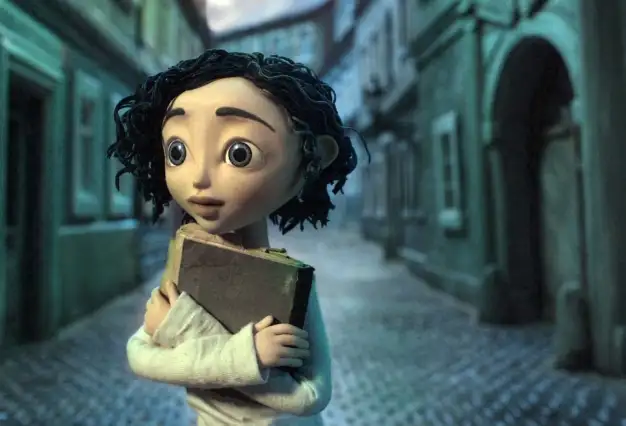
Sedláčková’s international collaborations bring her concerns to bear in a broader geopolitical context. In Maksym Nakonechnyi’s Butterfly Vision, which premiered in Un Certain Regard, the experience of a Ukrainian soldier returning from captivity serves as a lens for the examination of trauma and national identity. This is not to say the producer’s work is confined to a single mode. Projects like the animated short Fruits of Clouds and the family coproduction My Grandpa Is an Alien reveal her willingness to engage with more accessible or hybrid forms, while maintaining an emphasis on distinct authorial voices.
The politics of visibility
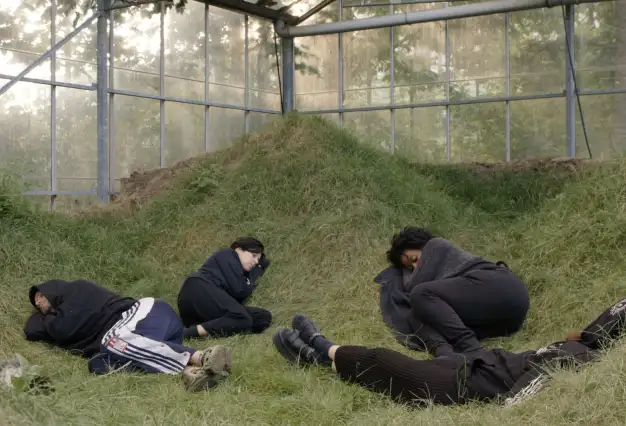
Among the projects Sedláčková is presenting in the Cannes Docs Showcase at the Cannes Film Market is Sisters, a documentary essay by Tereza Bernátková, currently in the making as a Czech-Slovak-French coproduction. The film is built around an archival discovery: over 10 hours of 8mm footage shot between the 1950s and 1970s in a Czechoslovak institution for girls and women labeled “mentally handicapped”. Filmed by a Catholic nun who lived in the community, the material offers a rare insider’s perspective on a closed environment.
Rather than treating the archive as a fixed historical record, Sisters places it in dialogue with the present, returning to the same location, where some of the women in the footage still live today. Moving between archival images, institutional documentation, and contemporary observation, Bernátková’s film gradually reveals the conditions under which these women lived and were rendered socially invisible. At the same time, it foregrounds the ethics of representation: who looks, who is seen, and how visibility is constructed.
Produced by MasterFilm, with Slovakia’s Kerekes Film and France’s BACHIBOUZOUK and Les Poissons Volants as coproducers, the project is currently in production, with completion targeted for 2027. While rooted in a specific historical context, it has global relevance, addressing the universal issues of social marginalization, institutionalization, caregiving, and women’s emancipation. The project is being presented in Cannes for further development and financing exposure, with additional support sought through Eurimages and European broadcasters.
In parallel, Sedláčková is developing The Sow, a new feature by Tereza Nvotová, whose recent drama Father circulated internationally. Developed at MasterFilm with writer Klára Vlasáková, the screenwriter of the Venice-premiered Ordinary Failures, the project is conceived as a Czech production with international coproduction potential.
From arthouse to serialized storytelling
While Sedláčková’s profile has been shaped primarily through arthouse features, she has recently expanded into serialized formats. Most notably, she produced the true-crime docuseries Kauza Kramný, directed by Petr Hátle for the OnePlay platform. Structured as a five-part series, the project revisits one of the most widely publicized criminal cases in recent Czech history through testimonies from family members, legal experts, and the accused himself. Rather than adopting the sensationalist strategies typical of the genre, the series reconstructs the case through firsthand testimony and expert perspectives, foregrounding the conflicting interpretations and investigational gaps that continue to divide public opinion.
Building on this experience, Sedláčková is now developing several serial projects that further extend her focus on character-driven stories shaped by power and structural pressure. Her series pipeline suggests an effort to translate the same authorial and ethical framework that defines her feature work into episodic formats.
Shifting industry conditions
Besides her producing activities, Sedláčková, along with Julie Marková Žáčková, is a cofounder of the initiative Girls in Film Prague, supporting female, nonbinary, and trans film professionals, while advocating for structural change within the Czech audiovisual sector. Established as part of a wider international network, the Prague branch has operated for eight years on an informal, volunteer-driven basis.
In its early phase, the initiative focused primarily on articulating the presence of structural inequalities within the industry and encouraging institutions to engage with them more systematically. This has led to a gradual shift toward data collection and a clearer understanding of gender representation across key creative roles. As these disparities have become more widely acknowledged, the initiative has moved toward more concrete forms of support.
Its current activities include developing mentoring programs to connect emerging filmmakers with professional environments, facilitate access to industry networks, and explore targeted funding mechanisms for early-stage projects, extending support to the same types of voices that Sedláčková engages with in her production work. At the same time, the initiative continues to function as a platform for dialogue, promotion, and networking, maintaining its role in shaping industry discourse while building tools to address structural barriers in practice.
Related news

Related people
Dagmar Sedláčková
Producer,
Film Contact
Czech Republic