02 April 2022
Refurbished new world
Refurbished new world

The upcoming Czech sci-fi film Restore Point uses a crime thriller narrative to ponder the philosophical and ethical implications of the technology-driven resurrection.
written by Martin Kudláč for CZECH FILM / Spring 2022
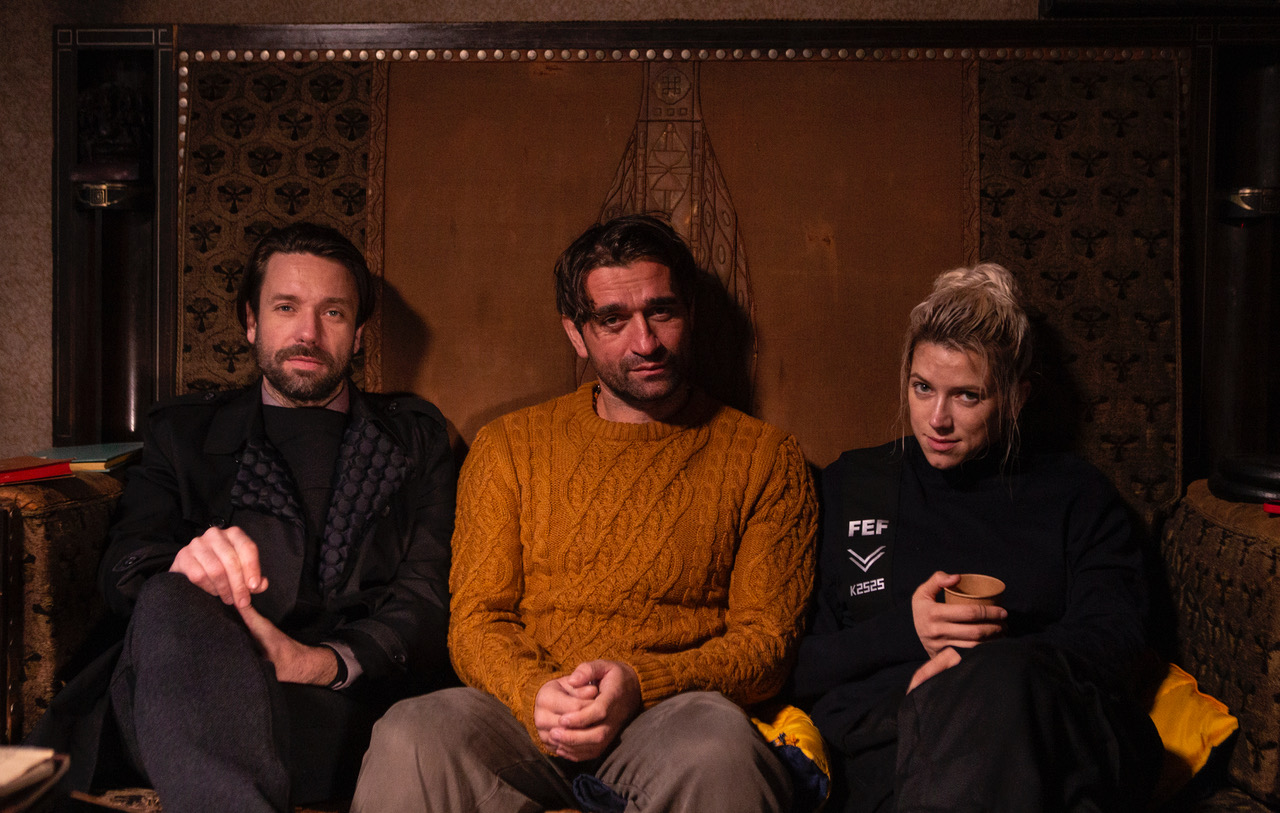
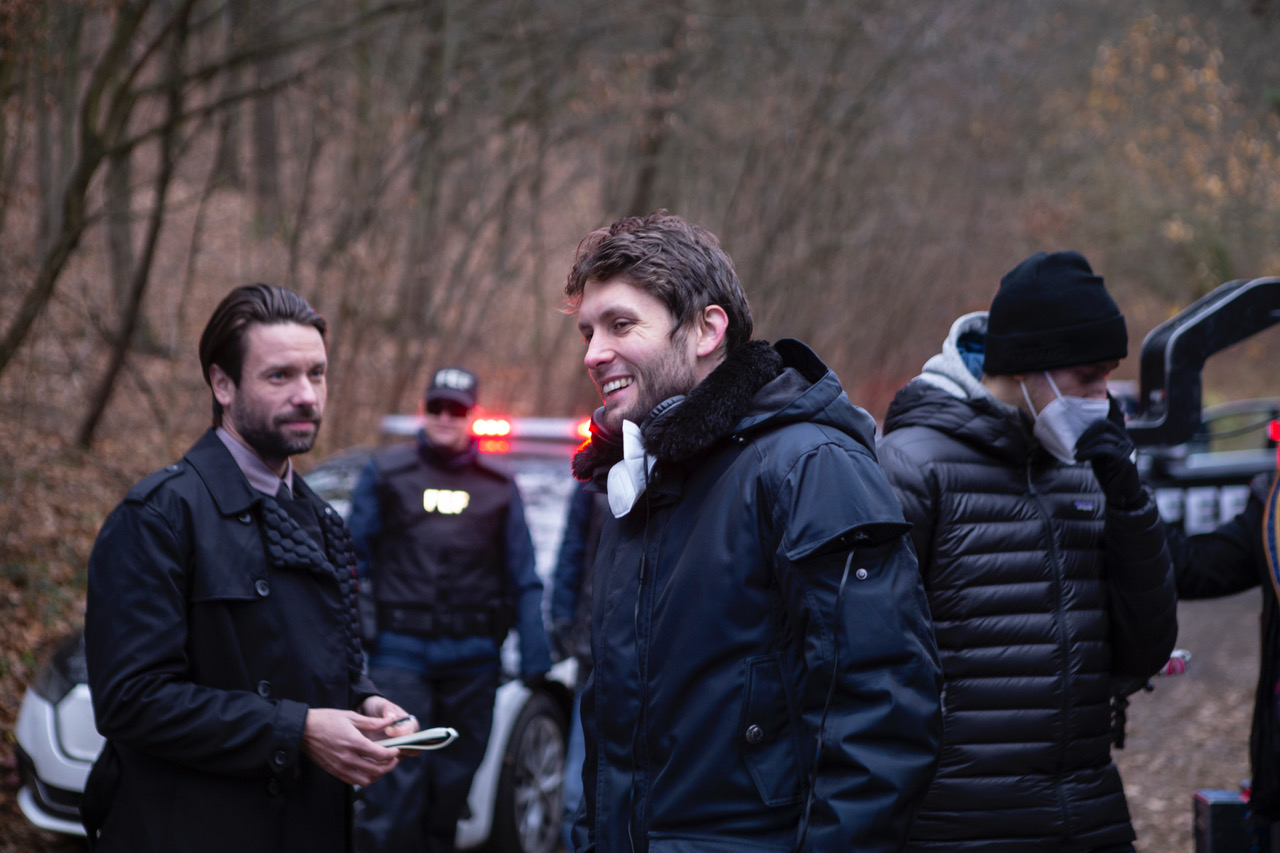
In a dark space brimming with crates and equipment, a car sits squeezed between LED video panels, depicting a background of nondescript scenery beneath a bridge. The crew bustling around the car are hard to recognize since everyone’s face is covered. “It’s not a dystopia,” says Jan Kallista firmly.
The Czech producer, from the Prague-based production outfit Film Kolektiv, is referring to his latest project, the sci-fi crime thriller Restore Point, not the situation on set.
After a meticulous development phase, principal photography on the film, originally set for 2020, was disrupted by the outbreak of the COVID pandemic. The Czech Republic was the first country to adopt health and safety protocols for its audiovisual industry, which allowed it to restart relatively quickly.
Kallista assembled the crew as soon as it was possible, and the preventive measures put in place by the Czech Association of Producers enabled them to shoot the film in the wake of the third wave of COVID. But even leaving aside the fact that it is a pandemic film, Restore Point ranks among the most ambitious Czech projects of recent years.
Institute of immortality
The sci-fi genre has had a low profile in Czech cinema up to now. Restore Point aims to challenge that. Kallista doesn’t hide his aspirations to push the envelope of genre filmmaking, citing as an example Jupiter’s Moon, by the trailblazing Hungarian director Kornel Mundruczó.
In fact the first drafts of Restore Point were, like Mundruczó’s film, framed by the migration crisis and the xenophobia of that period. But several years of development led screenwriter Tomislav Čečka and director Robert Hloz to reconsider, choosing a more universal and timeless setting for the story. In the final version of the screenplay, ethical and philosophical issues take precedence, though the once-in-a-century pandemic ended up making the narrative even more relevant.
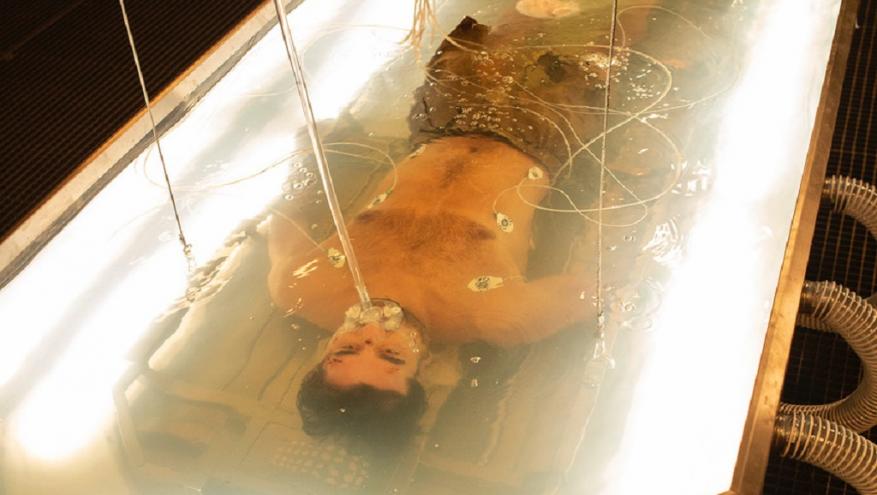
Restore Point takes place in the near future of 2041, an age of boundless datafication, ubiquitous algorithms, and emergent singularity. In line with the prophecies of historian and social philosopher Yuval Noah Harari, the new technologies of this era allow human beings to be brought back to life in the event of unnatural death, and every citizen of the Free European Federation is guaranteed “the right to one full human life.”
Čečka and Hloz’s vision veers slightly into Philip K. Dick territory, as the process of resurrection, based on a person’s data, is supervised by a state agency known as the Institute of Restoration. But this new technology, which eliminates the possibility of absolute murder, turns out to have unforeseen consequences.
One of the consequences is explored in the film’s central story, set in Prague, where young detective Emma Trochinowska is assigned to investigate the killing of a married couple. When the restoration team can bring back only the husband, David Kurlstat, Emma and David join forces to find out whether the second chance is just another tool for the manipulation of society.
Rise of talents
Restore Point has been generating buzz on the industry circuit after becoming the first Czech project ever to be pitched at the Asia Film Financing Forum, in Hong Kong, followed by outings at the Network of Asian Fantastic Films (part of the Bucheon International Fantastic Film Festival), the Frontières Market at the Fantasia International Film Festival, and the Baltic Event in Tallinn, where it was crowned with the Screen International Best Pitch Award in 2017.
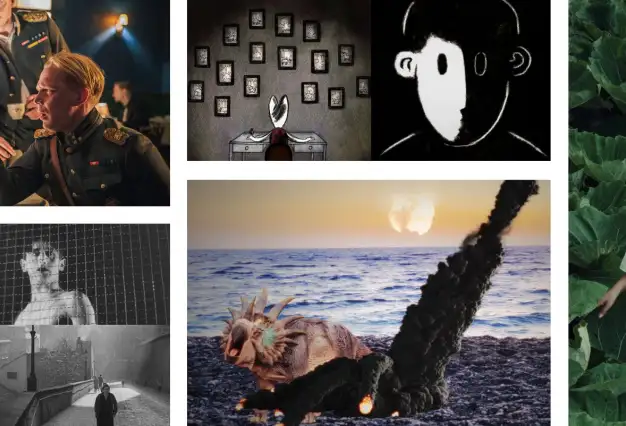
The ambitious sci-fi crime thriller marks director Hloz’s first feature-length outing. After working as a director of commercials following his film studies in the Czech Republic and South Korea, the emerging filmmaker demonstrated his talent and propensity for pushing genre norms in the award-winning short Numbers (2012), which marries a Blade Runner-like setting to the premise of Death Note.
Next, Hloz’s darkly droll short film Liars (2016), which follows a ragtag group of kids trying to conceal the fatal accident of one of their friends, ended up as a semifinalist in the 43rd Student Academy Awards. But his mid-length work Temporary Consciousness (2014) echoes the speculative nature of Restore Point the closest: The protagonist decides to have part of her memory erased in an effort to return to normal life after she is raped. In 2014, Hloz’s short films secured him a coveted spot in Berlinale Talents, the renowned talent development program for early-career professionals, thereby sealing his status as a rising star.
Not only is Restore Point the first feature project for the young director, but it is also the impressive big-screen debut for other Czech talents, including stage actress Andrea Mohylová, cast in the starring role of detective Trochinowska. Previously, Mohylová appeared in the student film Death Lake 3, the trailer to a nonexistent film about a homicidal miller, and starred in a theatrical adaptation of Karel Čapek’s satirical sci-fi classic War With the Newts. Kallista also managed to get Filip Marek (“the most sought-after cinematographer in the Czech Republic currently”) on board in his feature-length debut as a director of photography. Marek cut his teeth shooting hundreds of commercials, and is known for his hypnotic style.
Trans-European sci-fi affair
Film Kolektiv producer Kallista and his crew had their share of hurdles to clear to get the project off the ground. One of them was the film’s budget: its €1.8 million price tag puts it in a different ballpark from other domestic feature debuts. Yet the quality of the project, along with its potential, convinced the Czech Film Fund to support development and production to the tune of €338,500.
Joining as coproduction partners were the established Slovak company D.N.A. Productions (known for the Holocaust film The Auschwitz Report), as well as Film Produkcja, one of the largest production houses in the Polish market (Agnieszka Holland’s Mr. Jones), and the Serbian outfit Mali Budo (The Samurai in Autumn). All of the national funding bodies in each of the partner countries supported the film as well, and Restore Point also received funding from Creative Europe MEDIA.
The majority of scenes were shot in and around the Czech capital, with the remainder of the shooting days spent in the two coproduction countries, Slovakia and Poland. Kallista revealed that the beautiful nature of Slovakia was used for drive-through shots, while Warsaw’s skyscraper-lined boulevards served as a background for the film’s Prague of the future.
Czech Television joined the project as a coproduction partner along with the Czech VFX and postproduction studio Magiclab, which was tasked with teleporting the story to the year 2041. Magiclab has a strong track record, having created effects for U.S. blockbusters including Guy Ritchie’s thriller heist Wrath of Man and his live-action reimagination of the musical fantasy Aladdin.
The bulk of SFX work will be distributed between the Czech Republic, Slovakia, and Poland, with Magiclab handling core tasks in addition to overseeing and coordinating work in the coproduction countries. The Serbian coproduction partner will be in charge of sound post-production and music composition.
Reflecting the coproduction structure, the film’s cast is also international. Newcomer Andrea Mohylová stars alongside a coterie of experienced domestic actors. Matěj Hádek, of the award-winning social dramedy The Snake Brothers, plays the surviving husband David Kurlstat, while Václav Neužil, who had the starring role in the biopic Zatopek, the Czech 2022 Oscars submission, portrays investigator Mansfeld.
Award-winning Polish talent Katarzyna Zawadzka (the blockbuster Letters to M.) plays David’s secretive wife Kristýna Kurlstatová, who could not be restored, while her colleague, the veteran actor Lech Dyblik (familiar to viewers from the recent works of Lech Majewski and the controversial big-screen adaptation of The Painted Bird), plays a black-market salesman. Award-winning Slovak actor Milan Ondrík (Let There Be Light) stars as Viktor, who becomes entangled with Kristýna.
Recycling back to the future
Finding the right visual key for the movie’s art direction, set design, and props was crucial. “Restore Point is basically a period piece, but set in the future,” Kallista noted. “We can’t create a perfect future, so instead we’re returning to something close to us.” The film’s motif of recycling and reuse was also turned into a guiding visual concept. Just as bodies are reused in the story, so are objects and buildings in the mise en scène, giving shape to the film’s overall retrofuturistic style.
Socialist modernism is dominant in the urban topography of Restore Point’s world. Buildings in the brutalist style, the signature architecture of the former Soviet bloc, are reused here with a slightly futuristic spin, resulting in a style that may be described as baroque sociofuturism.
In fact, recycling and reuse weren’t employed solely as a visual theme in the film. Throughout production, Restore Point adhered to sustainable shooting practices, following an array of “green” recommendations, including the recycling of sets.
VFX studio Magiclab will clean up the scenes shot on location, adding futuristic overlays to enhance the brutalist architecture. Retrofuturistic elements will be rendered as organically as possible, including nuances like the user interfaces on devices and displays, to authentically reflect the emerging new technology and its mainstreaming in the near future as biotech.
The rough cut of Restore Point is expected to be complete by April 2022, while work on the sound mix continues as Czech sound designers and the Serbian studio invent original sounds for the future. The final cut is scheduled for March 2023, with the world premiere planned in the same year. Esteemed and award-winning Polish editor Jarosław Kamiński (Ida, Cold War) will be working on the film’s cut.
Theatrical release in all four countries has already been secured, and the producers remain open to potential deals with streamers and VOD platforms as distribution rights in territories outside the coproduction foursome remain available. Sales agents are currently in negotiations.
Despite Restore Point being an independent sci-fi crime thriller, Kallista is not pinning his hopes solely on a genre viewership. He believes the story, with its exploration of the philosophical implications that humankind will sooner or later have to face, will be attractive to non-genre platforms as well.
Looking at the current appetite of A-list festivals for thought-provoking, genre-oriented fare, it’s hard to argue. In any case, the Czech producer is so confident in the potency of Restore Point’s material that he’s already drafted a proof of concept for two sequels and a spin-off series.
“I believe we are creating a unique film that is unparalleled in Europe,” Kallista concluded.