14 January 2026
Fairytales, failed coups, and burning holidays
IFF Rotterdam
Fairytales, failed coups, and burning holidays
IFF Rotterdam

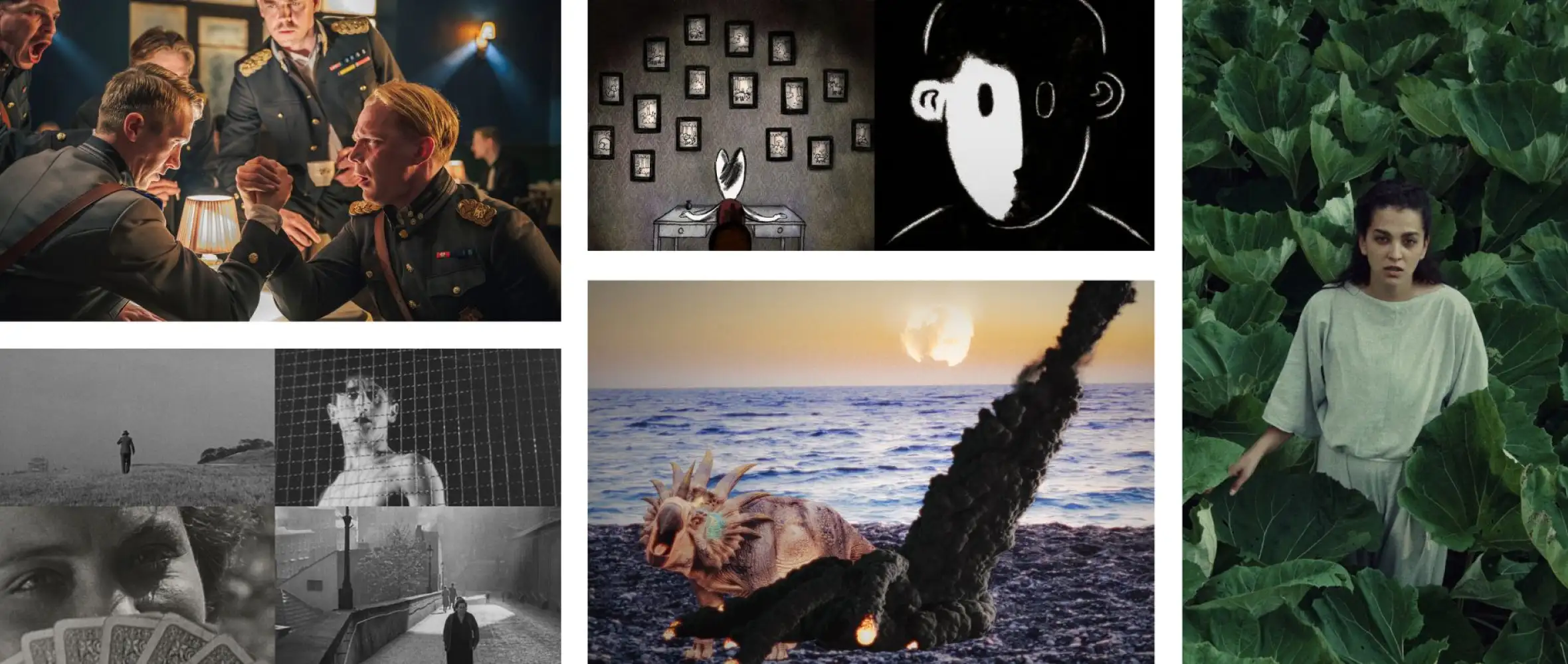
Czech titles will appear in several sections of the 2026 International Film Festival Rotterdam, confirming the festival’s continued role as a key platform for Czech works at the intersection of auteur cinema and formal experiment. The lineup consists of Marie Lukáčová’s Tiger Short Competition entry Orla; Finnish director Samuli Valkama’s historical satire The Kidnapping of a President, shot entirely in the Czech Republic as a Czech minority coproduction; and Viera Čákanyová’s climate-focused docu-essay Greetings from Rhodes, premiering out of competition. Alongside these, two internationally circulating animated shorts from FAMU, Philippe Kastner’s Wolfie and Jamaica Kindlová’s Touching Darkness, will also screen in Rotterdam.
by Martin Kudláč for CZECH FILM / Spring 2026
The International Film Festival Rotterdam (IFFR) has long been a consistent point of entry for Czech cinema into the international arthouse and industry ecosystem. Over the past decades, Czech titles premiering or screening in Rotterdam have ranged from award-winning fiction features and historically anchored political dramas to experimental works, essay films, and short-form animation emerging from FAMU—by filmmakers including Petr Zelenka, Bohdan Sláma, Mira Fornay, and Jan Švankmajer—as well as internationally networked minority coproductions and boundary-pushing shorts.
The 2026 edition of IFFR (January 29–February 8, 2026) continues this tradition, with Czech participation spanning several sections and formats, from a high-profile historical satire to contemporary documentary and hybrid animated shorts, underscoring the Czech industry’s sustained alignment with Rotterdam’s curatorial focus on formally inventive cinema that speaks to urgent social and political questions.
A rap fairytale against patriarchy
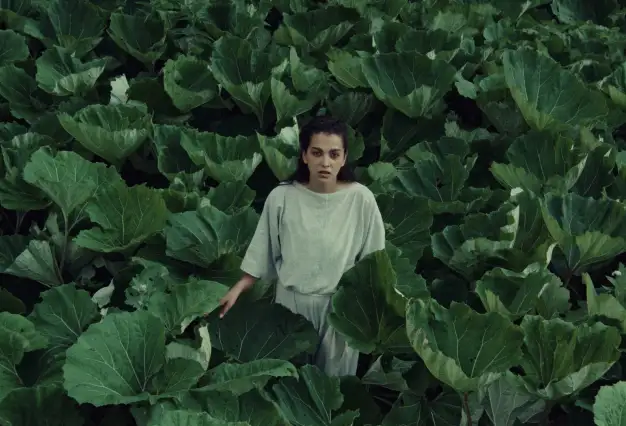
Competing in the Tiger Short Competition, Orla stands out as the most formally adventurous Czech title in Rotterdam’s 2026 selection. Directed by Marie Lukáčová, whose background is in video and visual art rather than traditional film practice, the 20-minute short combines live-action performance, 2D and 3D animation, and rap-inspired musical sequences to reframe the fairy tale as a contemporary story of rebellion.
Set in a rigidly stratified kingdom, the film follows Jasna, a young girl whose resistance to an authoritarian ruler leads her to go into exile. Her alliance with Eagle, the guardian of the forest, opens up themes of systemic injustice, ecological imbalance, and feminist agency. While grounded in archetypal storytelling, the project is deliberately addressed to teenage and adolescent audiences, reflecting a confidence in younger viewers’ ability to navigate layered, multimedia narratives.
Created over approximately five years, the film was conceived to maintain narrative clarity while deliberately stacking heterogeneous media textures. The live-action component was shot across multiple Czech locations, including forest exteriors near Opava, the exterior of Červená Lhota Castle, and interiors at Prague’s Troja Castle, with cinematographer Tomáš Kotas employing a distinctly cinematic register. The visual strategy combines 16mm film stock with digital and VHS material, creating a deliberately anachronistic, period-inflected aesthetic. This hybrid approach extends into animation and VFX through parallel workflows, with 2D animation created by Lukáčová herself and VFX animation made by Aleš Zůbek. The rap dimension functions both narratively and strategically: performers from the rap scene appear on-screen, with original songs reinforcing the “music-fairytale” concept beyond the film itself.
Produced by Klára Mamojková and Wanda Kaprálová of the Czech outfit CLAW films and coproduced by Matej Sotník of Guča Films (Slovakia), Orla received support from both the Czech and Slovak Audiovisual Funds, Moravian-Silesian Region, the Czech Ministry of Culture, and UMPRUM, including targeted backing for formally experimental production. Lukáčová’s use of rap as both narrative device and performative language positions the film at the intersection of animation, music video aesthetics, and political expression, aligning closely with Rotterdam’s long-standing interest in cross-disciplinary work.
Satirising extremism through historical farce
Selected for the Luminaries section, The Kidnapping of a President is the Czech minority coproduction in the IFFR’s lineup. Directed by Finnish filmmaker Samuli Valkama, the feature revisits a largely forgotten episode from Finnish history, when an attempted kidnapping of former president K. J. Ståhlberg in October 1930 briefly pushed the country toward political chaos.
The story centers on Lieutenant Colonel Eero Kuussaari, who, after a night of heavy drinking and nationalist grievance, leads a group of poorly prepared army officers in an ill-conceived plan to abduct the retired president. The scheme quickly unravels, due in part to the determination of Ståhlberg’s wife, Ester, exposing the ideological emptiness and internal disarray of the far-right movement. Valkama approaches the material through dark comedy, allowing absurdity and escalation to reveal how personal obsession, masculinity, and political naïveté can collide with devastating potential consequences.
Production-wise, The Kidnapping of a President was shot entirely in the Czech Republic, with Prague and several regional locations standing in for 1930s Helsinki. The Rudolfinum was repurposed as the Finnish Parliament, while locations in Králův Dvůr, Ralsko, and Terezín were transformed into period-authentic city streets and rural settings, underscoring the Czech Republic’s continued role as a flexible and cost-effective hub for European historical productions. Bionaut, which also coproduced another buzzy Finish film in 2019, Dogs Don’t Wear Pants, represented by Jakub Košťál and Vratislav Šlajer, coordinated local production on the ground.
The project is a Finnish–Czech–Dutch–Estonian coproduction led by TACK Films, with financial backing from the Finnish Film Foundation, the Czech Audiovisual Fund, the Netherlands Film Fund, the Estonian Film Institute, and the Nordisk Film & TV Fond. Nordic distribution rights have been secured by Nordisk Film, while Danish sales agent LevelK handles world sales.
Sardonic close-up on collective denial
Viera Čákanyová—whose posthuman trilogy includes FREM (Forum, Berlinale 2020), White on White (winner of the Opus Bonum for Best World Documentary at Ji.hlava IDFF), and Notes From Eremocene, which returned to Berlinale’s Forum as a formally radical meditation on technology, climate collapse, and the erosion of democratic structures—will premiere her latest work, Greetings From Rhodes, in IFF Rotterdam’s short film program out of competition.
The short takes the form of a satirical documentary essay examining Western society’s capacity to normalize crisis. Shot on the Greek island of Rhodes during the devastating wildfires of summer 2023, the film shifts focus away from catastrophe as spectacle to instead observe the behavioral choreography of tourists who continue their holidays uninterrupted, insulating themselves from disaster through routine, consumption, and carefully maintained illusion.
Čákanyová mimics the visual language of amateur holiday videos, postcards, and promotional travel imagery, juxtaposing these with the omnipresence of fire and smoke. Real statements from holidaymakers are set against glossy advertising slogans from travel agencies, producing a contrast that exposes how ecological collapse is aestheticised, trivialized, or actively ignored. The director further extends her critique through absurd animated interventions, including dinosaur imagery and tourist commentary, creating a dissonant, memetic counterpoint to the unfolding catastrophe.
Produced by Slovak outfit Guča Films with Czech minority coproduction participation from Somatic Films (also behind the Czech 2026 Oscar submission, I'm Not Everything I Want to Be), Greetings From Rhodes continues Čákanyová’s experimental approach while reframing concerns central to her posthuman trilogy. By foregrounding the conflict between nature and civilization, along with the psychological mechanisms of collective denial, the film deploys irony and absurdity as analytical tools, resulting in a tragicomic work that is both sharply critical and unsettlingly recognizable. Internationally, the film is represented by Alexandra Gabrižová of DiscoSailing.
Czech encore
Recognized as one of the Czech Republic’s most consistent engines of festival-traveling films, the Film and Television School of the Academy of Performing Arts in Prague (FAMU) will again be visible at IFFR with two short animated works appearing in the festival’s education-oriented programming. Philippe Kastner’s animated fable Wolfie, a finalist in the 2025 Student Academy Awards, centers on a perfectionist illustrator whose ordered world is disrupted when an accidental ink blot brings a small wolf pup to life. Marked by the “mistake” that created him, Wolfie gradually reframes error as a creative force rather than a defect. Restrained in form and accessible in tone, the film reflects Kastner’s own engagement with perfectionism and authorship, using the act of drawing as both narrative engine and metaphor. Jamaica Kindlová’s Touching Darkness adopts a similarly precise yet emotionally attuned approach, offering a short animated documentary portrait of Vítek, a visually impaired 10-year-old boy whose perception of the world is shaped primarily by sound and touch. Utilizing sand animation, the film aligns its tactile form with its subject matter, translating Vítek’s sensory experience into a haptic visual language. Both films are internationally represented by Alexandra Hroncová of the company Cinefila.
The Czech presence at IFFR 2026 also extends into the festival’s Cinema Regained program, which foregrounds restorations and recontextualizations of film history. The selection includes a cluster of short works from Czechoslovakia spanning the interwar and postwar periods, notably films by Alexander Hackenschmied (Aimless Walk, The Prague Castle, School Assignment) and Čeněk Zahradníček in collaboration with Vladimír Šmejkal and E. F. Burian (Atom of Eternity, Hands on Tuesday, Máj, Soldier’s Story). Together, these concise formal experiments and poetic studies reflect early Czech engagements with modernist aesthetics, movement, and cinematic abstraction, situating Czech film heritage within Rotterdam’s broader effort to reassess overlooked or marginalized strands of film history through contemporary curatorial frameworks.