01 January 2026
Uncanny motherhood
Animal by Milada Těšitelová
Uncanny motherhood
Animal by Milada Těšitelová

A woman gives birth to a cat, and a suburban order begins to collapse. Animal announces the arrival of Czech screenwriter Milada Těšitelová as an emerging feature director with a distinctly stylized voice. Drawing on her personal experience, the film reframes motherhood as a body horror–tinged absurdist tragicomedy, unfolding as social conformity and maternal ideals begin to fracture in a meticulously controlled suburban world. Combining deadpan humor, expressive design, and a deliberately distorted reality, Animal translates Těšitelová’s long-standing interest in female subjectivity, shame, and social norms into a genre-driven film that has already drawn attention on the international industry circuit.
by Martin Kudláč for CZECH FILM / Spring 2026
From page to set
Since graduating from the Screenwriting and Dramaturgy Department at Prague’s FAMU, Milada Těšitelová has built a reputation for herself moving between literature, television, and cinema. She first emerged as a writer of darkly playful, anxiety-tinged stories with her triptych graphic novel Plague and her short story collection Cats and Other Stories About Fear, mapping out her fascination with domestic unease, fear, and the uncanny in everyday life. In parallel Těšitelová established herself as a scriptwriter and dramaturg at Czech Television, working on children’s TV shows and editing film scripts.
Several of Těšitelová’s feature scripts have attracted attention. Currently, both Mountains in the Mist and the adaptation of her graphic novel Plague are in preparation. The screenplay Inbetween Worlds, cowritten with Diana Cam Van Nguyen and to be directed by Nguyen, is based on a real-life marriage-of-convenience proposal by a Vietnamese man seeking Czech residency, and was awarded Best Unproduced Script by the Czech Film Foundation. Těšitelová also wrote the script for the film adaptation of the novel The Northern Star, by Nina Špitálníková, slated to be directed by Eléa Gobbé-Mévellec.
Although Těšitelová has long identified primarily as a screenwriter, her work has consistently carried a strong authorial imprint—visually vivid, formally bold, and steeped in female subjectivity—making the move into directing feel almost inevitable. She gradually tested the waters behind the camera, most recently as second unit director on the Czech Television miniseries Offspring, directed by Michal Blaško.
Yet it was the personal material of Animal that finally pushed her fully into the director’s chair. Drawing on her own experience of becoming a mother and confronting the often invisible pressures within maternal communities, Těšitelová wrote the script over the course of eight years. However, it was producer Julie Marková Žáčková who suggested that, rather than turn over the script to someone else, Těšitelová should claim it as her first full-scale directing experience.
With Animal, Těšitelová pivots from being a screenwriter to an auteur staking out her own cinematic territory. The film extends the thematic concerns of her previous work, female agency, conformity, and the monstrous side of the everyday, into a more expansive visual and genre-driven language.
Domestic nightmare in suburbia
The seed of Animal was planted more than a decade ago, long before Těšitelová became a mother. “The first idea, that a girl gives birth to a cat, came years ago,” she said. At the time it was a curious, slightly mischievous notion, an absurd breach of the natural order, but nothing more. It wasn’t until she experienced the social pressures of early maternity firsthand that the concept crystallized into a fully fledged narrative. “When I became a mother, I suddenly felt enormous pressure from society,” she said. “Much more than ever before, I became sharply aware of the expectations placed on women, especially mothers.”
The well-meaning advice, judgmental comments, and emotional shocks she received along the way were folded into the screenplay. What began as an absurdist premise slowly transformed into a psychological and social story about conformity, shame, and the terrifying fragility of the maternal ideal, shaded by elements of body horror.
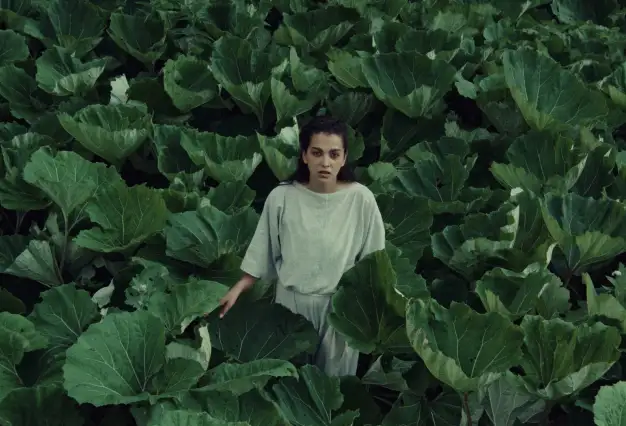
Animal follows Fany, a young woman who longs to fit into an immaculate, aspirational suburban community built around perfect families and tightly policed norms. But her attempts at belonging collapse when she gives birth not to a baby but a black cat, an event she desperately tries to conceal, triggering a spiral of paranoia, guilt, and increasingly surreal encounters with the women around her.
The genre framework—part horror, part tragicomedy, part absurdist satire—was shaped by this tension between the personal and the grotesque. Producer Žáčková notes that Animal deliberately heightens the contradictions present in real maternal communities: the earnest solidarity, the hidden competition, the collective policing of what a “good mother” should be. Although not overtly political, the script touches on themes that resonate widely: belonging, exclusion, the rituals of suburban respectability, and the quiet violence of social expectations. “For me these are universal things,” said Těšitelová. “No one should be pushed out of society. That’s a basic moral assumption.”
In Animal, these universal anxieties are articulated through a darkly playful sensibility. The horror is intimate rather than supernatural, the comedy is dry, deadpan, and often cruel; and the surrealism stems not from fantasy but the distortions of a community that demands perfection at any cost. As Žáčková put it, the hook is immediate: “Just the tagline—a story about a woman who gives birth to a cat—grabs your attention right away.”
What begins as a private joke, an impossible birth, becomes a sharply observed story of how a woman’s sense of self can warp under the weight of motherhood’s expectations. Animal walks a fine line between fear, satire, and tragic absurdity, charting the increasingly claustrophobic unraveling of a woman who tries to do everything “right,” only to discover the very system she wants to belong to will never accept her.
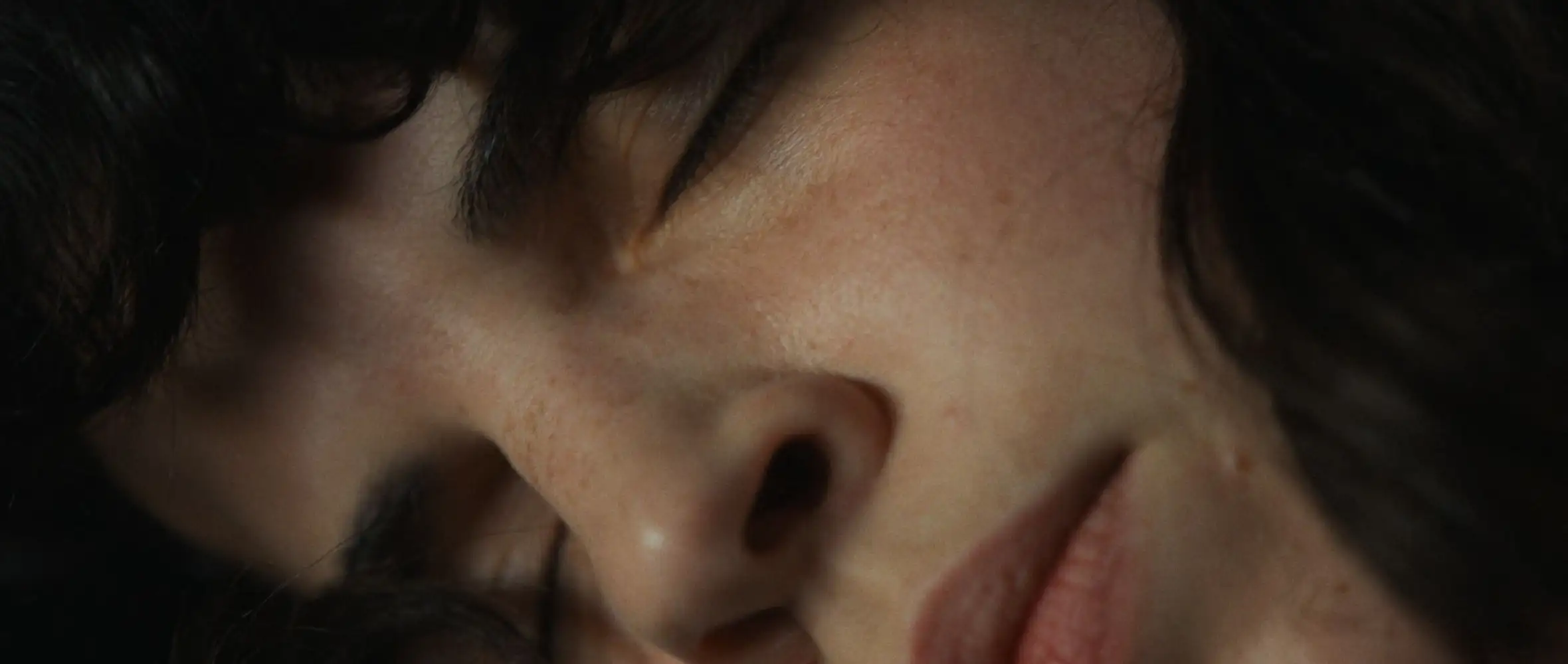
Czech actress Antonie Formanová, who starred as the protagonist of the CANAL+ miniseries Daughter of Nation, has the leading role in Animal. Her performance of Fany demanded an unusual combination of emotional authenticity, physical endurance, and fearless commitment to the film’s increasingly surreal logic. Formanová had to navigate scenes that were by turns intimate, grotesque, and psychologically raw, including the unsettling cat-birth sequence and several emotionally exposing moments that required careful collaboration with the intimacy coordinator.
Both director Těšitelová and producer Žáčková singled out Formanová’s preparation as extraordinary: She arrived to rehearsals already deeply attuned to the character’s contradictions, bringing a grounded realism to a role that could easily have tipped into parody. “She took it incredibly seriously,” Těšitelová said, adding that Formanová’s ability to oscillate between vulnerability and stylized absurdity is a defining energy of the film.
Opposite her, Vojtěch Vodochodský (Waves), delivers what Těšitelová and Žáčková describe as a revelatory, sharply timed comedic turn playing Viktor, Fany’s well-meaning but insecure husband. Known for his dramatic work, Vodochodský surprised the team with what the producer calls “a remarkable talent for comedy,” fully embracing the character’s deadpan logic, repetitive verbal tics, and slightly bewildered masculinity.
His on-set rapport with Formanová, quick, playful, and responsive, allowed the film’s tonal shifts to feel organic, even in its most absurd sequences.
A motherhood fever dream
Although Animal stems from the personal experiences of motherhood, its world is rooted not in documentary realism but a heightened cinematic universe, one that mirrors the protagonist’s inner disorientation through design, color, and spatial logic. From the beginning, Těšitelová says she knew the film should feel recognizable yet fundamentally “wrong,” as if a polite suburban facade had been nudged just a few degrees into the uncanny.
To do this, Těšitelová turned to cinematographer Filip Marek and production designer Ondřej Lipenský, fresh off their Czech Lion–winning collaboration on the sci-fi thriller Restore Point. Their prior work demonstrated a shared intuition for crafting believable worlds that carry a faintly futuristic, disquieting charge, a quality that is the backbone of Animal’s visual identity.
Working closely with Těšitelová, they devised a visual system anchored in subtle estrangement. The film was shot in real locations—houses, maternity homes, suburban settings—but framed, lit, and decorated to produce the sense that something is fundamentally misaligned. “You immediately sense that the world is off,” Žáčková said.
This world-building is strengthened by the film’s influences, which range from Eastern European fairy-tale logic to Italian giallo. Těšitelová mentions Dario Argento’s Suspiria and Inferno not for their supernatural baroque but for their approach to color, atmosphere, and emotional distortion—the saturation of a seemingly ordinary space with dread or eerie stillness.
Equally crucial to the film’s identity is costume designer Dagmar Šteflová, who comes from a background in high-end advertising. This cross-disciplinary sensibility proved vital, as the clothing in Animal is designed as a visual language, with matching color palettes, exaggerated silhouettes, and polished ensembles signaling the aspirational, curated identity that Fany longs to emulate.
In parallel with the film’s heightened aesthetic, the production approached all scenes involving nudity and physical or emotional exposure with sensitivity. Žáčková, also one of the leading figures behind the Czech branch of Girls in Film, has long advocated for the implementation of intimacy coordination standards across the local industry. For Animal she insisted that a certified intimacy coordinator, Janka Neustupová of New Era Safety, be brought in from the beginning.
Raising international momentum
Žáčková is the co-producer of Animal on the Czech side for her company Nochi Film, with Barbara Janišová Feiglová of Hitchhiker Cinema co-producing for Slovakia, as majority co-producers on the project alongside Czech Television. The project has secured core financing from the Czech Audiovisual Fund, the Slovak Audiovisual Fund, and Creative Europe MEDIA, with additional regional support pending from the Karlovy Vary region, where part of the shoot took place in Jáchymov.
The film wrapped principal photography in late November 2025, with editing led by Slovak editor Marek Královský (Tony, Shelly and the Magic Light), who began work in December. The team aims to complete the cut by spring 2026, followed by sound, VFX, and the score by acclaimed Slovak composer Jonatán Pjoni Pastirčák (Father, Broken Voices), who was involved throughout production to weave in diegetic musical motifs used on set.
During development, Animal was presented at several international industry platforms, including the Berlinale Co-Production Market, Sofia Meetings, and the Frontières Market.
The project is aiming for a world premiere at a major international festival, with Cannes and Venice among the targeted options. Distribution in the Czech Republic and Slovakia is currently under discussion, with the producer noting that the final release strategy will depend on which festival hosts the world premiere.