30 May 2022
New Generation Transforming Czech Cinema, Part Two
New Generation Transforming Czech Cinema, Part Two

Czech cinema has no lack of daring creative teams, usually in the form of writer-director or producer-director pairings. But there is also a coterie of close-knit director groups in current Czech cinema, for example the I, Olga Hepnarova writing-directing team of Petr Kazda and Tomáš Weinreb, now developing their third feature-length project, The Forest; Ondřej Provazník and Martin Dušek of the award-winning drama Old-Timers (2019); and perhaps the most recognized auteur duo on the Czech documentary scene, Vít Klusák and Filip Remunda, who also run the production outfit Hypermarket Film.
by Martin Kudláč for CZECH FILM / Summer 2023
Klára Tasovská and Lukáš Kokeš: A creative symbiosis of fluidity
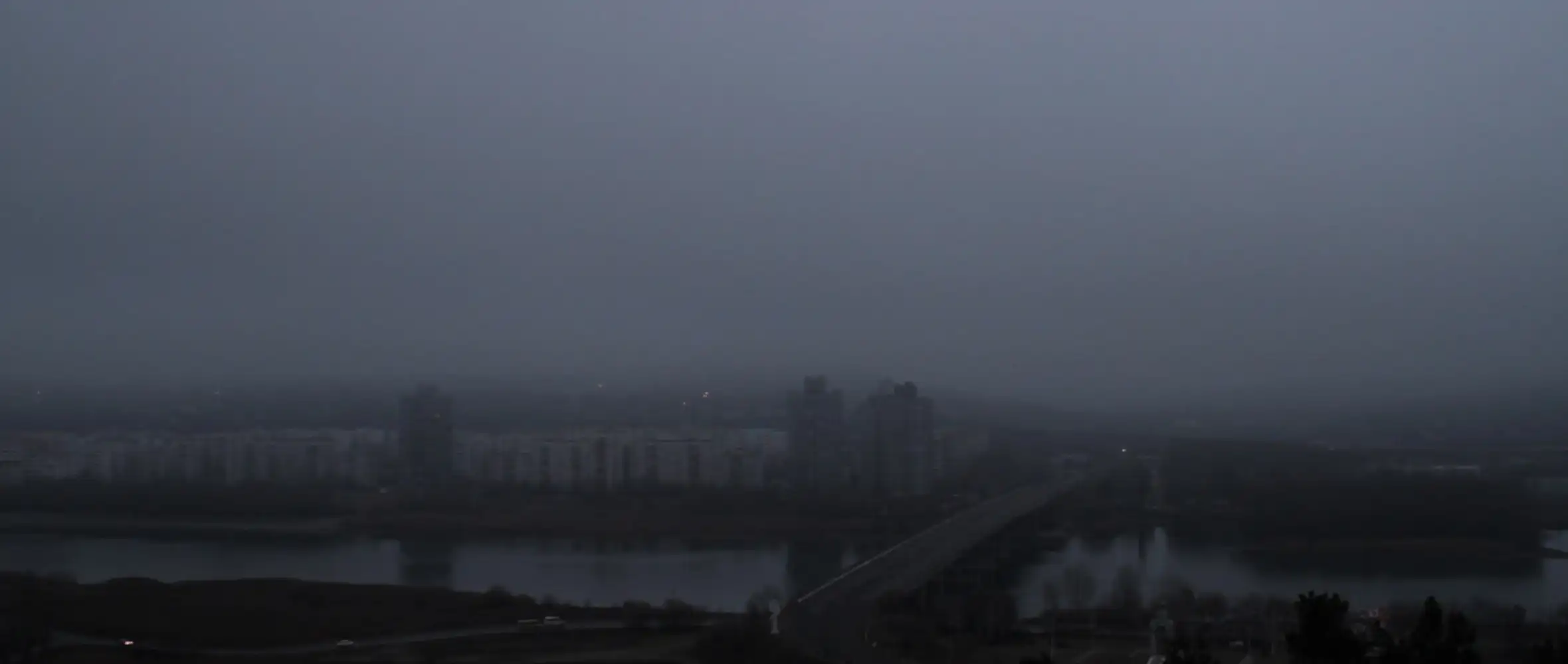
Following in the trailblazing footsteps of Remunda and Klusák is the new-gen documentary auteur pair Klára Tasovská and Lukáš Kokeš. Considered among the most progressive documentarists in the Czech industry currently, Tasovská and Kokeš began collaborating when they were still in school. Tasovská served as story editor on Kokeš’s short work Redemption Attempt of a TV Repairman Josef Lávička in Nine Scenes (2008), then in his following work, 59/180/184 (2009), she extended her involvement, not only consulting on the script and editing the film, but also working as director’s assistant. Kokeš repaid the service, joining Tasovská’s project Midnight (2010) as cowriter and cocinematographer. Tasovská’s audiovisual essay on darkness and light pollution was a milestone, establishing a signature style and approach for the duo.
The two continued to function as a collective on Food Ltd., an episode about food and society for the long-running TV project Our Czech Nature (1993–2008). They cowrote and codirected the episode, with Kokeš on camera. The long and static shots lensed by Kokeš have since become a trademark of their aesthetics, defined by poetic observation and their method of working with social actors. They also began to introduce fictional aspects into their documentary work, blurring the borders between documentary and fiction filmmaking, and shedding the conventions of documentary cinema.
The major career breakthrough for the pair came in the form of their largely self-financed feature-length debut Fortress (2012), in which they captured a visit to the Pridnestrovian Moldavian Republic (Transnistria), a country whose independence is acknowledged only by a handful of states (the film’s subtitle is “The story of a country that officially doesn’t exist”). Shooting the film with a two-person crew—Kokeš behind the camera and Tasovská doing sound—the pair dove into the totalitarian time capsule of Transnistria. However, The Fortress is not a political reportage but a depiction of a country through cinematographic language. The film went on to win Best Czech Documentary at the Jihlava International Documentary Film Festival and has traveled the international festival circuit, including screenings at CPH: DOX and DOC Point Helsinki, as well as being shortlisted for the LUX Prize.
Following Fortress, Tasovská and Kokeš did an episode of the docuseries Czech Journal (2013– 2020), produced by Klusák and Remunda. They both contributed a directing episode to the feature-length documentary portmanteau Gottland (2014), and then went on to work on their sophomore feature, Nothing Like Before (2018), a time-lapse documentary that follows high school students for two years as they prepare for the world of adulthood. The intimate observation of their protagonists in fleeting, authentic moments here is complemented by authentic restagings of actual scenes via documentary reconstruction.
For their current project, I’m Not Everything I Want to Be, spotlighted in the Cannes Docs initiative, the two have shifted the clearly delineated roles they have played up to now, in writing and directing together with Kokeš doing the camerawork and Tasovská editing. This time out, Tasovská assumes directing duties on her own while Kokeš, her regular on-set partner, segues into the role of producer. The film follows the rise of Czech photographer Libuše Jarcovjáková and the ups and downs of her life, from Soviet-occupied Prague to a sham marriage, to her escape to Berlin and a career breakthrough in Tokyo, leading to the photographer’s international renown as an artist. Through it all, Jarcovjáková, now in her late 60s, reflects on her personal journey to emancipation and the search for her own sexual identity.
Currently, the project is in late development, with Tasovská working on script rewrites. Editing on the film itself will begin in summer/fall 2022, preceded by additional shooting days in summer. Kokeš emphasizes that I’m Not Everything I Want to Be will be neither a standard docuportrait nor a bio-pic. The director has unprecedented access to Jarcovjáková’s photo archive, and her photographs will be incorporated into the film in a major way.
The producer refers to the film as autofiction with an unreliable narrator, and likens it to Chris Marker’s La Jetée (1962): a novelistic format with a slideshow embedded, offering Jarcovjáková’s unique perspective on the world. The film is being made as a Czech-Slovak-Austrian coproduction with spring 2023 eyed for completion. Negotiations with potential sales agents and distributors are already under way, and the producers are currently looking to present the film to festival programmers. I’m Not Everything I Want to Be is produced by Somatic Films, a new Prague-based production company founded by Tasovská as a production outfit for her auteur endeavors.
Meanwhile the duo of versatile documentarists continue to work in parallel on other projects. Kokeš script-consulted on Blix Not Bombs, a forthcoming documentary project by Greta Stocklassa about the former UN weapons inspector Hans Blix, who was tasked with investigating the existence of weapons of mass destruction in Iraq, while Tasovská served as story editor on the documentary Intensive Life Unit (2021), directed by Adéla Komrzý, and on Viera Čákanyová’s experimental documentary FREM (2019), as well as coediting Francesco Montagner´s award-winning documentary Brotherhood (2021).
The pair is also collaborating on the documentary Velvet Generation, an up-close look at the LGBTQIA+ community in Eastern Europe by emerging director Ivana Hucíková. Tasovská script-consulted as story editor, while Kokeš assumed producing duties for the Czech coproduction partner, nutprodukce, where he has been a co-owner since the company’s launch.
In fact Kokeš’s career as producer originated under the roof of nutprodukce, when he took over the fiction feature debut Brutal Heat, a magic-realist road movie by newcomer Albert Hospodářský. As Brutal Heat nears the finalized edit, the documentarist-cum-producer is already developing the next project, Summer School, 2001, the autofiction drama debut by another promising domestic talent, Vietnamese Czech filmmaker Dužan Duong.
Next up, Tasovská and Kokeš will reunite for the feature-length project Algae, sure to be yet another turning point in their colorful careers. The innovative pair is already at work on the script of what is being described as a social road movie based on actual events, and the Czech Film Fund has already awarded funds to support development of the film with nutprodukce as producer.
Algae, the story of a Czech family stranded on a highway in Poland, will be “a civil tragicomedy in a Czechoslovak New Wave vein,” the filmmakers say. The project marks their first foray into fiction, employing techniques they gravitated towards in their previous works. In spite of the different form, however, Kokeš noted that they still intend to employ a minimalistic crew, likening the filming process to the one used by Chloé Zhao for her celebrated docufiction Nomadland (2020). With principal photography tentatively set for 2024, the producers are currently seeking coproducing partners in Poland and Slovakia.
Instead of each of them sticking to clear-cut roles, Kokeš says he and Tasovská regard filmmaking as a more fluid process, citing the examples of Sergei Dvortsevoy, Yuri Ancarani, and the director-editor team of Eliza Hittman and Scott Cummings. Whatever direction they take, they intend to continue their work on documentary and fiction projects as a team while pursuing solo projects concurrently in various capacities.