02 March 2022
The steady renaissance of Czech genre cinema
The steady renaissance of Czech genre cinema

A new golden age of genre appears to be emerging in Czech cinema, energized mostly by up-and-coming talents
written by Martin Kudláč for CZECH FILM / Spring 2022
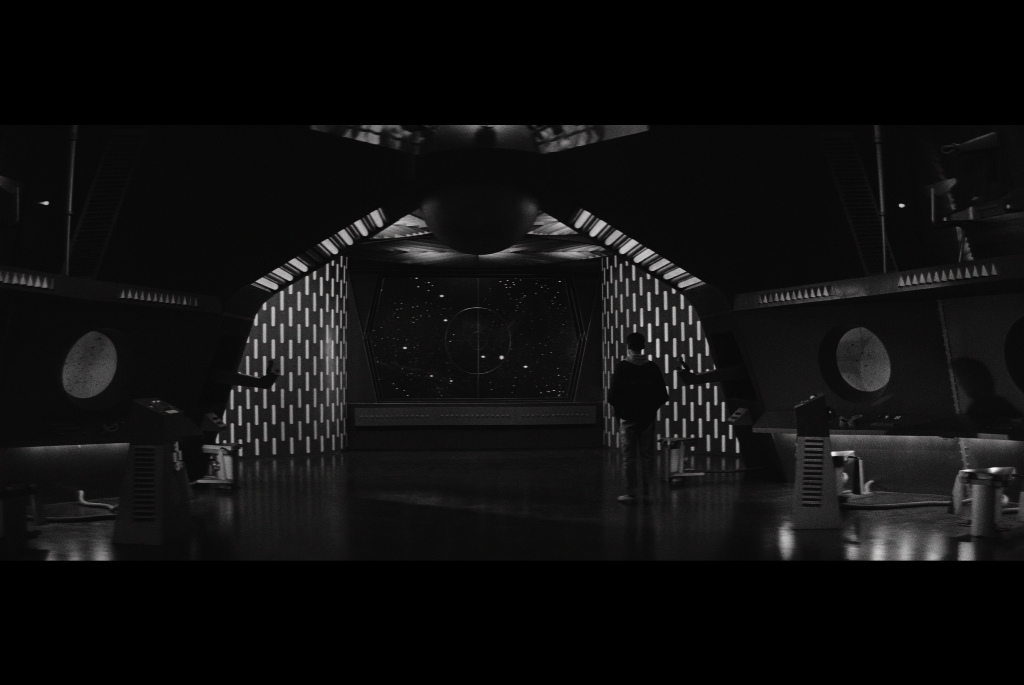
Genre films have a long tradition in Czechoslovak cinema, and three figures in Czech culture have had a global influence on genre narratives: Franz Kafka, with his nightmarish visions; Karel Čapek, the visionary author of sci-fi classics and originator of the word robot; and Karel Zeman, a pioneer of cinematic fantasy. Yet there is much more to Czech genre cinema than Jindřich Polák’s iconic masterpiece Ikarie XB-1.
Another golden age in Czechoslovak genre cinema was whimsical comedies incorporating elements of fantasy and science fiction, such as the works of the creative tandem Miloš Macourek and Václav Vorlíček, and Oldřich Lipský’s pop-culture gems Adela Has Not Had Her Supper Yet and The Mysterious Castle in the Carpathians. Even luminaries such as Věra Chytilová, Jan Němec, Miloš Forman, and Jan Švankmajer all gravitated toward genre films at some point in their careers.
Our daily genre
Given its deep-rooted tradition here, comedy remains the most prominent and in-demand genre among Czech moviegoers. Romantic comedies dominate the Czech box office every year, along with U.S. imports. In 2019, Martin Horský’s romantic comedy Women on the Run, was a record-breaking outing for a first-time director, taking a 32.6 percent share of the market and reaching the milestone of 1 million viewers faster than any other Czech film in history. Truly, producer-driven rom-coms, tailored to the taste of domestic audiences, are the magic formula for local blockbusters.
Meanwhile, on the small screen, crime is the second-most-represented genre. In addition to the steady stream of crime offerings and prestige content issuing from HBO (which also invested in the local original productions Wasteland and Burning Bush), Czech Television has responded to domestic viewers’ growing demand for quality TV by collaborating with producer and director Viktor Tauš, whose series Rats, from the underbelly of the drug world, has sold to territories including the Baltic countries, Slovenia, and even as far away as Australia. Before this, Tauš had the crime series Blue Shadows and Monsters of the Shore under his belt for the public broadcaster.
Writer, director, and producer Jan Prušinovský has created a new standard for socially conscious smalltown and village comedies, while director and writer Petr Kolečko masterminded the most-watched domestic comedy series, Most!, which confronts racism, transphobia, and homophobia with politically incorrect humor. Recently, Prušinovský has branched out into uncharted territory with a romance (or rom-com) that goes against the grain of local mainstream fare, Emma in Love, in which the main love interest has a past in adult entertainment. The film conveys a strong message against stigmatization while delivering it in an unsappy way, without moralizing.
In May 2021, Prušinovský added another genre to his filmography when he began work on Grand Prix. “A testosterone comedy about a journey, friendship, and stolen tires,” his biggest project to date is a road movie that will be shot across the Czech Republic, Germany, France, and Spain. While the good-natured provocateur is currently finishing the film in postproduction for a 2022 release, he is already in development on the family comedy The Funeral Is Tomorrow, an adaptation of the stage play of the same name by Natálie Kocáb, with his producing colleague and trusted coproducer Ondřej Zima, for their outfit Offside Men.
For Czech moviegoers, producer and director Petr Jákl and director Július Ševčík have become synonymous with glossy, ambitious, Hollywood-style productions. Up to now, Ševčík has focused mainly on historical projects like A Prominent Patient, a biopic about diplomat Jan Masaryk (son of Czechoslovakia’s first president, T. G. Masaryk), and is also known for his adaption of the Simon Mawer novel The Glass Room (released in the U.S. under the title The Affair). Jákl, with his ties to the L.A. film industry, has a penchant for genre fare as well, directing the found footage horror film Ghoul and the forthcoming epic historical action film Medieval, about the life of Jan Žižka, the military commander who never lost a battle.
As an antidote to polished productions like these, Czech cinema also offers an array of anarchistic shocktainment, both outrageous and absurd, tailormade for midnight viewing. Czech rapper Martin Pohl made the semiprofessional teen comedy Party Hard, which pushes the envelope of gross-out comedies. Since then, he has wrapped shooting on a sequel, Party Harder: Summer Massacre, upping the ante with a kinkier extravaganza of teen-n-toilet humor. Czech viewers appear to be up to the challenge, having chipped in their own money for a crowdfunding campaign that blew past all four of its milestones. Likewise, Slovak actor and director Lucia Klein Svoboda, who debuted behind the camera with her stylized social drama Little Feather, went into overdrive with The Revenger, a trippy comedy more irritating to the cinematic establishment than to its adventurous-minded viewers.
House of horrors
In recent years, darker genres have been more visible on the Czech scene than usual. Frequently cited as one of the best Czechoslovak films of all time, Juraj Herz’s legendary horror-comedy The Cremator, based on the novel of the same name by Ladislav Fuks, was recently named one of the 10 best horror movies ever by the film social platform Letterboxd, alongside such classics as Roman Polanski’s Rosemary’s Baby, Stanley Kubrick’s The Shining, and Alfred Hitchcock’s Psycho. Herz has long been the undisputed king of Czech horror, and the youngest generation of Czech filmmakers is picking up where he left off. Emerging director Jiří Sádek debuted with his modern adaptation of The Noonday Witch, a ballad subverting traditional tropes by the celebrated 19th-century poet Karel Jaromír Erben. F. A. Brabec has also brought the folk-nightmarish poems of Erben to the screen, especially from A Bouquet of Czech Folktales, his most famous work.
One notable talent who works in dark genres, Andy Fehu, hails from the amateur and DIY filmmaking scene. Fehu debuted with the low-budget horror morality tale The Greedy Tiffany, and while working on comedic webseries he completed his sophomore feature, Shoky & Morthy: Last Big Thing, a genre crossover of paranormal horror, splatter, and bromance, set in the world of YouTubers. Fehu’s millennial “hor-com” was produced by the Czech company Bionaut, a domestic powerhouse in genre oeuvres on big and small screens alike.
Bionaut scored a historic win for the Czech audiovisual industry when its online thriller series about cyberbullying, #martyisdead, produced by Bionaut CEO Vratislav Šlajer and Jakub Košťál with Mall.tv producer Milan Kuchynka, netted a coveted Best Short-Form Series International Emmy award, thus becoming the first-ever Czech Emmy winner. A sequel, #annaismissing, is already in the making and is being prepared simultaneously as a feature film and a webseries for the 2022 release. International deals are currently underway, with Dutch Features as the sales agent handling the rights. The director of #martyisdead and #annaismissing, Pavel Soukup, has also been tapped to direct the upcoming crime series Badge Vysočina, co-directed by Andy Fehu for TV Nova with Bionaut producing. Soukup is also putting his rising talent to work on another project for Bionaut under the title Meta, an adaptation of the bestselling superhero novel by young adult author Pavel Bareš.
Meanwhile, Bionaut is going ahead with the development of the ambitious international project Different, a cinematic trilogy based on creatures from Slavic myth, produced jointly by Bionaut’s sister companies in Poland and Slovakia (Kosmonaut and Raketa respectively), with Jan Komasa and Zuzana Mistríková producing alongside Šlajer and Košťál. Renowned Czech director Marek Najbrt is tapped to helm the first installment, The Wild Hunt, expected in spring 2022, while Polish filmmaker Piotr Zlotorowicz will direct the next film, featuring Vodianoi (a male water spirit), and the trilogy will wrap with The Nightmare, by Slovak screenwriter Barbora Galovičová. Different already has a series spin-off in development, boarded by Czech Television. It will consist of six hour-long episodes, each dedicated to a different mythical creature from Slavic lore.
After the success of #martyisdead and Shoky & Morthy: Last Big Thing, Bionaut has launched its very own label for auteur genre films, Planet Dark Originals, specializing in emerging directors. The first project will be by amateur writer-director Emil Křižka, who made the “redneck horror drama” Repulse, a low-budget thriller mixing gore and exploitation elements into a nonlinear narrative.
Bionaut is also preparing a genre bundle that the company plans to trade internationally. The package will contain the religious horror The Abortionist (written by Sára Zeithammerová and helmed by Pavel Soukup), the slasher survival film Mother Knows Best, and the zombie horror Quarantine Zlín (the latter two both by Andy Fehu). Bionaut CEO Šlajer says that genre production is viable and in-demand and that one factor in their success has been that their projects don’t attempt to mimic foreign films, but instead are thematically anchored in Central Europe.
Among the array of emerging young talents, Šlajer singled out Michal Blaško, Jan Haluza, and Miroslav Ondruš as being in the same category as Pavel Soukup and Andy Fehu. Another promising filmmaker he said he has his eyes on is Lukáš Bulava, who is preparing his fiction feature debut, The Yellow Flowers, which falls into the horror subgenre of neo-giallo. Bulava is also behind a nostalgic documentary mapping the phenomenon of Czech fast-dubbing, Video Kings.
Besides the Planet Dark platform for darker genres, Bionaut is expanding its genre emporium through content and media such as audiobooks and podcasts. Now the producers are even crossing over to young-adult adventure, as the company is preparing to finance the ambitious adaptation of the children’s adventure novel series Dustzone. The stories in the series take place in a fictive district of Prague where there is no electricity. The 13-year-old protagonist and his two best friends go on a mission to find out the secret of the strange distinct after the whole city suddenly finds itself in danger of being swallowed by darkness. The first film is expected to go into production in fall 2023.
Master of genre
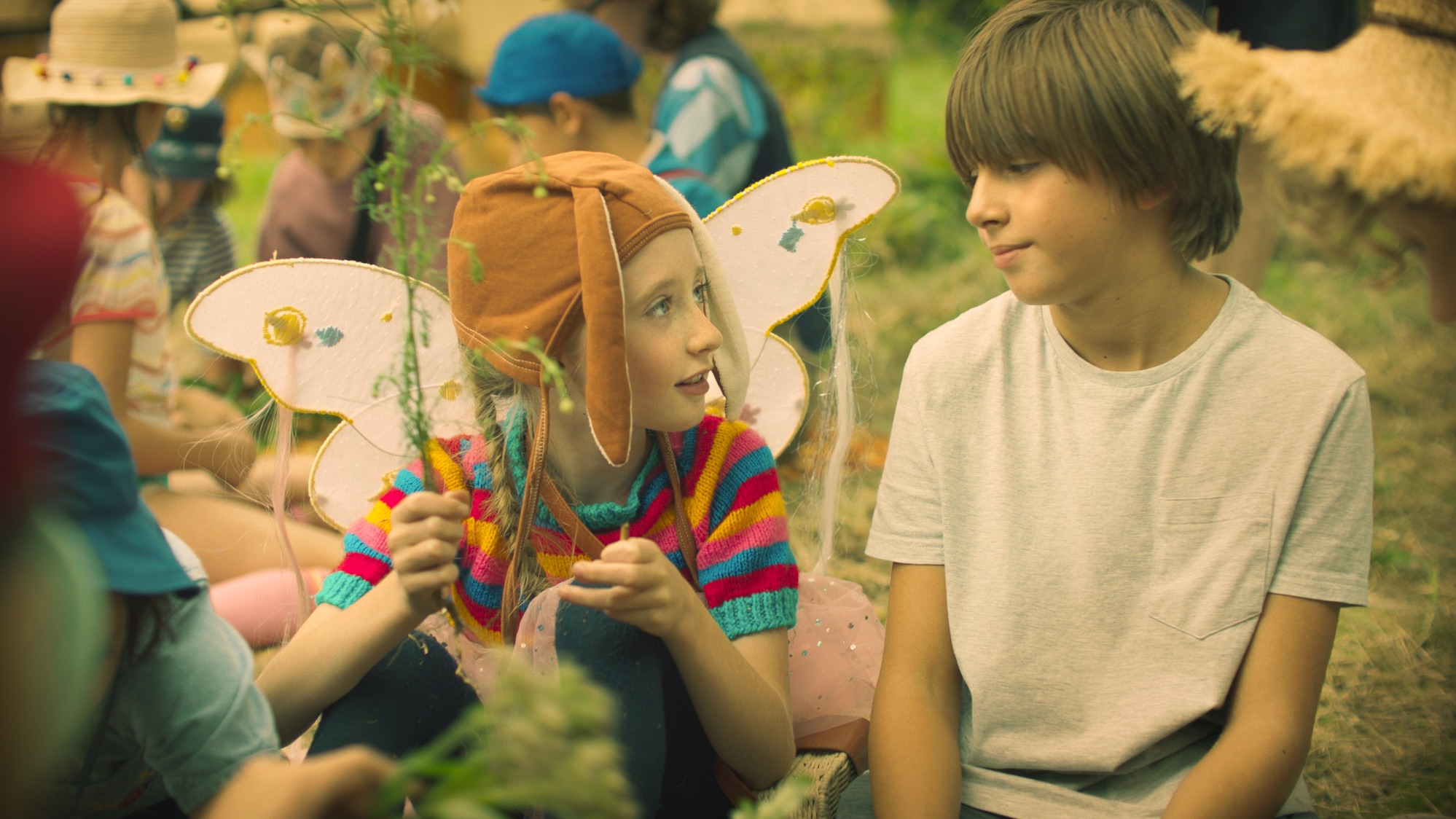
While Dustzone is a genre underrepresented in Czech cinema, producer and director Petr Oukropec of the production company Negativ has dedicated his directing career to this niche. After debuting with the family film The Blue Tiger, his sophomore effort, In Your Dreams!, was a coming-of-age story, mixing fantasy and reality, and his most recent work, Martin and The Magical Forest, has been traveling the international film festival circuit. Fairy tales remain a fixture in domestic cinema, with at least one premiere per year, including Three Brothers (2014), The Magic Quill (2018), Crazy Kingdom (2016), Angel of the Lord 2 (2016), and The Watchmaker’s Apprentice (2019).
Now, prolific director and genre craftsman Peter Bebjak is preparing a project to reimagine classic Czech fairy tales with the company he co-founded, D.N.A. Productions. Most of the company’s output to date has consisted of genre projects, and in the wake of his biggest project to date, The Auschwitz Report, Bejbak has attached himself to the fairy tale Princess Goldenhair, a Czech-Slovak-German coproduction, loosely based on a fable by Karel Jaromír Erben.
The multitasking Bebjak also recently finished shooting the revenge thriller Shadowplay, made in the nouveau noir style, synthesizing melodrama, thriller, crime, action, and psychodrama. He also helmed the period crime miniseries The Nineties, and will soon be directing Linna, a period drama with genre elements, inspired by true events in postwar Czechoslovakia. In the central story of Linna, the fates of three characters intertwine: a young secret service officer starting to doubt his mission; a Sudeten German in search of his lost family; and a smuggler who is a serial killer. The script was written by Miro Šifra, who is still at the start of a promising career. Having written for the miniseries Rats, he is now teaming up with Bebjak on the psychological horror The Well, which is currently in development and will be made as a Czech-Polish-Slovak coproduction. The movie tells the story of a notorious murder case from 1968, dubbed “the Czech Psycho” by investigators.
The Bebjak-Šifra partnership will continue after The Well, as they are also preparing an alternative-history crime film titled The Best World Possible. The dystopic story, set in the near future, unfolds in a world where the Velvet Revolution never happened and society is controlled by the secret service and the state’s propaganda apparatus. An elderly Václav Havel is one of the characters. The dystopian sci-fi is planned to go into production in 2022.
Dangerous visions
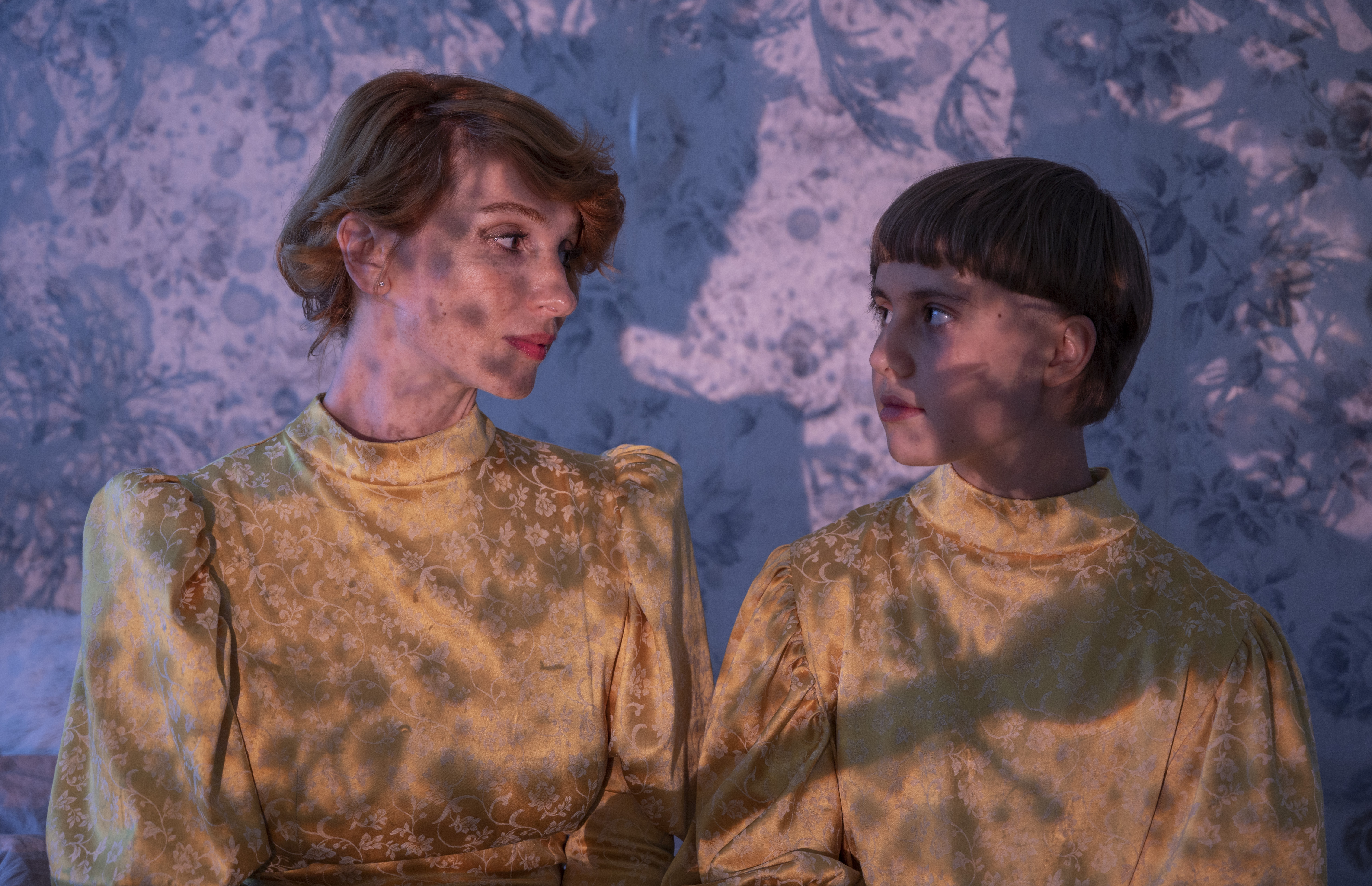
Science and speculative fiction is undergoing a resurgence in Czech cinema. Restore Point —an ambitious sci-fi crime film by newcomer Robert Hloz, about a near future when people can be brought back to life after death—has wrapped shooting and will be ready to hit the international film festival circuit in 2023.
Meanwhile, Romanian-Hungarian director Cristina Grosan has finished shooting her sophomore feature, the woman-driven apocalypse film Ordinary Failures, produced in the Czech Republic by the young and ambitious outfit Xova Film. Although not purely sci-fi, the story utilizes mysterious explosions as a backdrop for the psychological drama of the three female central characters, each representing a different generation. The film will be ready for 2022 festival submissions.
“A more varied genre mix, while maintaining artistic ambitions, could help us to see Czech reality from original angles, to inspire and move cinematography as a whole. Personally, I enjoy the combination of auteur film with a sci-fi element,” said Marek Novák of Xova. He revealed that he is also producing another genre-laden project, the feature debut by Vojtěch Strakatý, Eternal Peace, billed as an ecological dystopia. A young girl living in the near future, with society on the brink of an ecological apocalypse, has to sell her family’s belongings to pay off debts incurred by her father while being chased by debt collectors. Strakatý is also developing his next project, The Other Side of Summer, a low-budget summer film about a girl who discovers a mysterious portal in the middle of a lake.
In his fiction debut, Brutal Heat, documentary filmmaker Albert Hospodářský employs a sci-fi premise as a seemingly banal trip to visit friends at a cottage in the countryside turns into an action-packed adventure when it turns out the Earth is on a collision course with a shard from the Sun that threatens the extinction of humankind. The production phase of the project will last until January 2022, followed by post-production, which is expected to wrap in March 2022. The producers at nutprodukce are eyeing summer 2022 for the film’s premiere.
Screenwriter Lucia Kajánková makes her feature-length directing debut with Porcelina, a road movie about love, anxiety, and the end of the world. Michal Kráčmer of Analog Vision is producing the film for a 2023 release, making Kajánková another emerging talent to keep an eye on. In addition, she is a showrunner on the upcoming fresh and cocky high school webseries TBH, which channels the energy of British young adult in the vein of Skins.
Still, the roster of up-and-coming genre filmmakers wouldn’t be complete without Adam Sedlák, who introduced himself with the innovative desktop webseries The Term, followed by his feature debut, the intimate horror Domestique. Sedlák, who, along with his peers has succeeded in making a virtue out of low-budget production, recently wrapped shooting on his sophomore feature, BANGER., which is slated for release in summer 2022. Immersed in the subcultures of rap and drugs, Sedlák’s coming-of-age film was shot entirely on an iPhone. The emerging writer-director has called his newest work “a mix between Pusher and Dancer in the Dark, with a pinch of Superbad.”

Smorgasbord of genres
With the pipelines of domestic producers full to bursting with genre projects, it doesn’t look likely that the flow will dry up anytime soon. Mariana Čengel Solčanská, who has already directed several genre features, recently finished shooting her latest work, a departure from the crime thrillers she has made previously. A World War I romance between two characters from opposite ends of the social ladder, The Chambermaid is a mold-breaking picture about a same-sex relationship in the days before women had won voting rights.
Director Radek Beran is working on a puppet animation sequel to his family fantasy The Little Man, set for 2023, though he is currently busy with a 3D animated remake of one of the most popular films in Czechoslovak history, The Proud Princess (2023). The story of an arrogant princess whose scheming advisers want her to marry a weak king has its world rights handled by the Beverly Hills–based Cinema Management Group. Other intriguing animated projects that are currently in the works, for children and adults alike, include a movie adaptation of author Karel Čapek’s sci-fi classic War With the Newts, directed by Aurel Klimt. Šimon Koudelka is working on a mixed-media 2D and 3D animation feature using a photographic matte painting background and real footage characters. The project, titled Fichtelberg, is a period adventure about a young orphaned nobleman who finds his life and love in the mysterious mountains on the Czech-German border.
With an average of four films per year, the Czech Republic placed sixth in a European Audiovisual Observatory ranking of countries by number of animated films produced between 2015 and 2019. The Czech Republic was the only country from Central and Eastern Europe to make it into the top 10. Czechs hold a 3 percent share in the VOD market for animated films, and there are no signs of the tempo slowing. This year’s edition of Europe’s leading animated film coproduction event, Cartoon Movie 2022, will welcome four Czech projects: the family film Living Large by Kristina Dufková; Miroslav Krobot’s Rosentaal, combining live action with rotoscope animation; the children’s film Tony, Shelly and the Magic Light by Filip Pošivač; and Diplodocus, a Polish-Czech family film by Wojciech Wawszczyk.
While established filmmakers like Jan Prušinovský, Peter Bebjak, and Jan Hřebejk continue their careers dedicated to genre works on the big and small screens alike, the new rising tide of genre cinema is largely propelled by the young generation of directors, writers, and producers, who are reenergizing a rich variety of subgenres.